Pancreatic cancer begins when abnormal cells in the pancreas start to grow uncontrollably, forming a tumor. The pancreas, a gland located deep in the abdomen between the stomach and spine, plays a vital role in digestion and blood sugar regulation by producing enzymes and hormones.
Normally, cells grow, divide, and die in a controlled way. However, when this process malfunctions, excess cells may develop, forming a tumor. While some tumors are benign and do not spread, malignant tumors are cancerous and can invade surrounding tissues.
In the case of pancreatic cancer, even if the disease spreads to other parts of the body—such as the liver, lungs, bones, abdominal wall, or lymph nodes—it is still referred to as pancreatic cancer. When it has spread beyond the pancreas, it is called metastatic pancreatic cancer, which is more advanced and challenging to treat.
Types of
Pancreatic Cancer
Pancreatic tumors are classified as Exocrine or Neuroendocrine, depending on the type of cell they originate from. This distinction is important, as each type behaves differently and responds to different treatments.
Exocrine tumors make up over 90% of pancreatic cancers, with adenocarcinoma being the most common form. In contrast, neuroendocrine tumors (PNETs), which account for less than 10%, tend to grow more slowly than exocrine tumors.
Symptoms
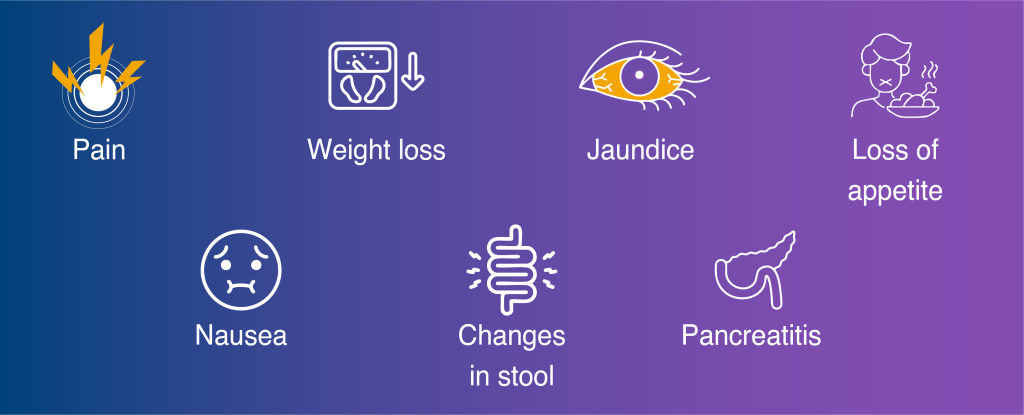
Pancreatic cancer may cause only vague, unexplained symptoms, such as:
If you are experiencing one or more of these symptoms, we urge you to speak to your doctor immediately and reference pancreatic cancer.
Risk Factors
Certain factors may increase your chances of developing pancreatic cancer like: