The female reproductive system contains two ovaries, one on each side of the uterus. They are small, oval-shaped glands. They produce and store eggs (also called ovum) and make hormones like estrogen and progesterone that control menstrual cycle and pregnancy.
Ovarian cancer is a growth of cells that forms in the ovaries. The cells multiply quickly and can invade and destroy healthy body tissue.
Ovarian cancer treatment usually involves surgery and chemotherapy.
Advanced Ovarian Cancer, is cancer that has spread beyond the ovaries or fallopian tubes to other parts of the body, such as the liver, lungs, or bones (typically stages II–IV).
Recurrent Ovarian Cancer, is a cancer that returns after a period of successful treatment and remission.
Ovarian cancer was often referred to as the “silent killer” because it was thought that there were no symptoms until the disease was widespread and at an advanced stage. Fortunately, recent studies show that this is untrue.
Women with early-stage ovarian cancer often experience:
Women who experience these symptoms daily for more than two weeks should consult with their gynecologist for an examination.
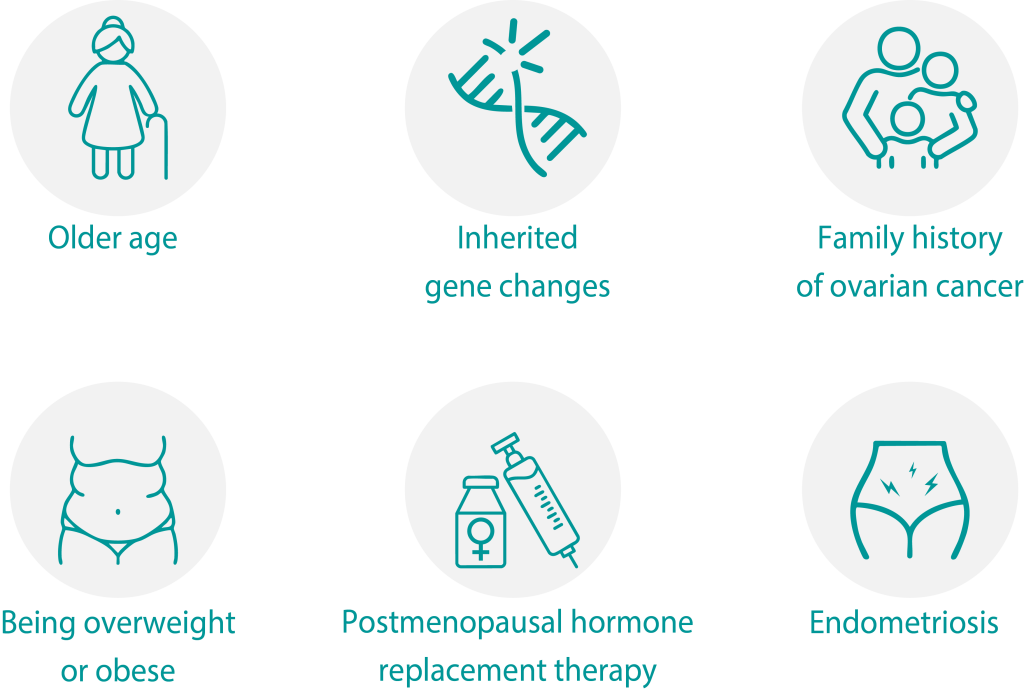
Risk factors
Factors that can increase your risk of ovarian cancer include:
Diagnose
Diagnostic Tests
When evaluating a women for ovarian cancer, physicians perform a general physical and pelvic exam. In addition, blood tests may be ordered. Finally, a surgical assessment may be recommended to confirm the diagnosis and aid in staging the disease.
Imaging and Staging
Several imaging tests help physicians diagnose ovarian cancer, as well as determine the type, stage, and extent of disease. Imaging tests may include a transvaginal ultrasound, computed tomography (CT) scan, and other tests.
Stage I
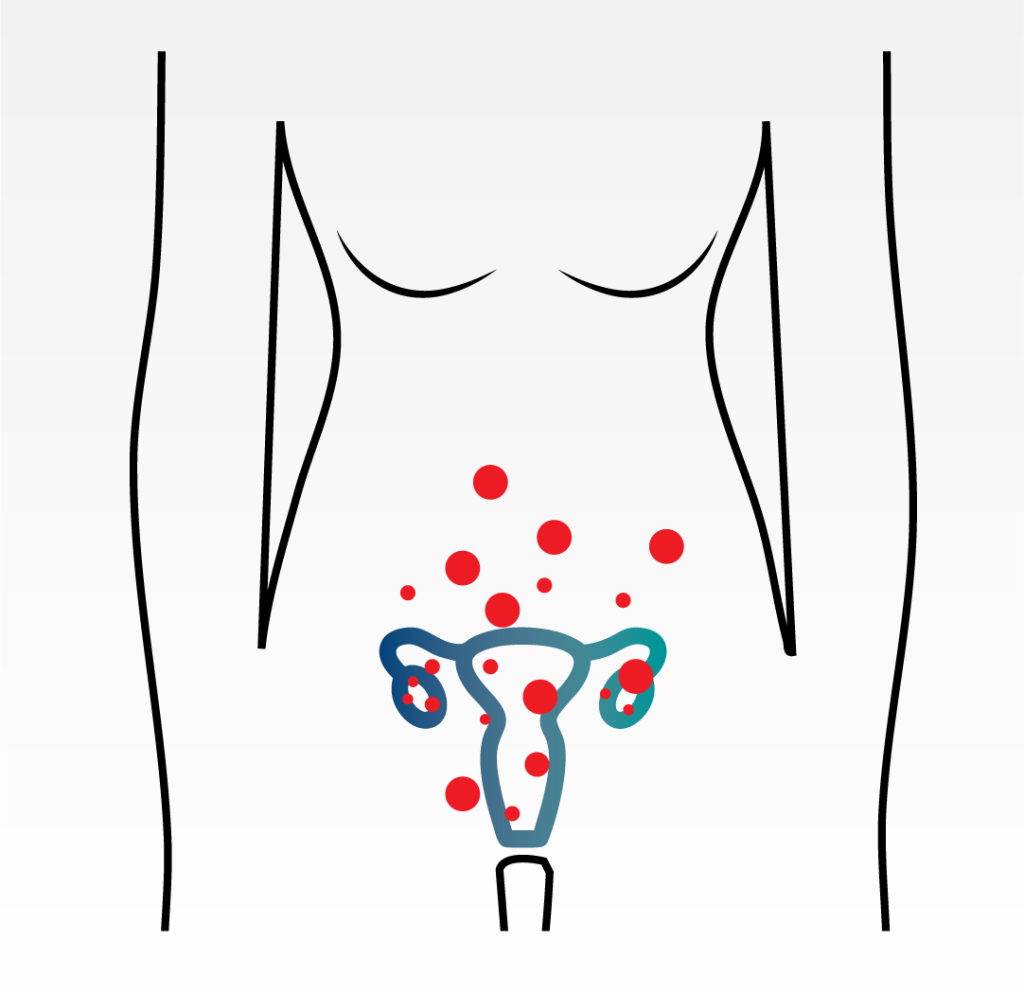
Cancer is found in one or both ovaries. Cancer cells may also be found in fluid collected from the abdomen.
Stage II
Cancerous cells have spread from the ovaries to other parts of the pelvis, such as the fallopian tubes or uterus.
Stage III
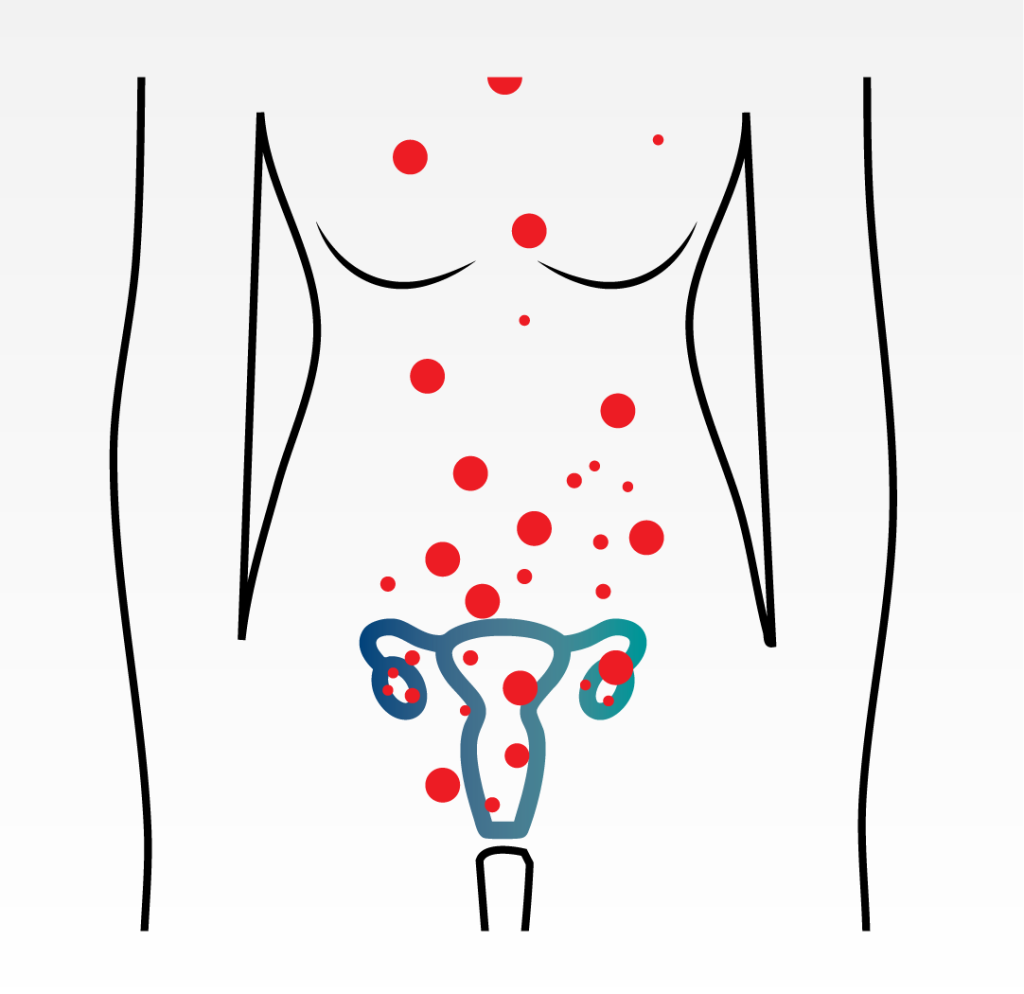
Cancerous cells have spread outside the pelvis to the nearby lymph nodes, diaphragm, intestines, or liver.
Stage III
The cancer has spread beyond the abdomen, often to the lungs or spleen.